Dear Friends
Our operations have moved to http://www.CommonGroundServices.org. Please check out our new website!
Dear Friends
Our operations have moved to http://www.CommonGroundServices.org. Please check out our new website!
Terrorism: The most meaningless and manipulated political word
An Interview by Glenn Greenwald of Remi Brulin, a Terrorism Expert
Glenn Greenwald: My guest today on Salon Radio is Rémi Brulin, who teaches undergraduate and graduate courses at NYU, and is currently working on and close to finishing his Ph.D. dissertation, entitled The US Discourse on Terrorism Since 1945, and how The New York Times has Covered the Issue of Terrorism, and he is to receive his Ph.D. at the Sorbonne in Paris. This topic is very close to a lot of our most prominent political disputes and much of what I’ve been writing about, so I’m really excited to be able to talk to you about this and I appreciate your taking the time to talk to me today.
Remi Brulin: Yes, thanks for having me, Glenn.
GG: Let me just begin by asking you to summarize what the focal point of your research has been; you’ve been researching this topic for several years now. What has been the scope of your research, what kinds of things have you been looking at, and what is the general scope of what you’re writing about?
RB: As you said, I’ve been researching this for a while now, about eight years, and what I’m looking at specifically is the American political discourse on terrorism, basically since ’45 but what I show is that the discourse, the term ‘terrorism’ started being used in the discourse only in ’81, beginning with the Reagan years. What I also look at is how the media, particularly in the case of my dissertation The New York Times, has used the term over the years.
And the big question, of course, is the question of the definition of terrorism, meaning who do we call terrorists, and who do we not call terrorists, and whether there is questions of double standards and everything. And this is relevant because at the international level, there is no agreed-upon definition of terrorism, and at the US level, meaning for example the Executive Branch, there also is no one single definition of terrorism, and yet the term is used over and over again in our political discourse, and as you’ve shown in many of your articles, it has consequences, very serious consequences.
GG: If you go back to – and the title of your dissertation indicates that your beginning year that you’re looking at is 1945 – over the next several decades after World War II, you can find generalized instances of presidents declaring whoever happened to be the enemy of the day to be terrorists, in kind of like a name-calling, demonizing way.
But when did the term really start to take on international prominence, meaning when did we start struggling to come up with definitions of the term as though there was some kind of hardened scientific meaning that we could ascribe to it?
RB: There was one first attempt at getting to an international definition of terrorism when the League of Nations produced a convention in order to fight terrorism in ’37, but it failed. Then after that, basically the term is not used in the US political discourse at all, until the ’70s, more or less. The president, we know that today because it is very easy to research, because we have access to the papers of the president and they’re digitized and we can use search engines; we could not do that ten years ago. So we know for a fact that presidents until Carter never really used the term terrorism, and Carter used it mostly in ’79 and 1980, and it was in reference to the hostage crisis in Iran.
Even then, even when Carter used it, and he used it in, I don’t know, 120 speeches or so, even he was not using the term terrorism as a discourse, meaning that the term was used once or twice to refer specifically to that one act of terrorism, namely the hostage crisis. But he did not turn this into a discourse. The term terrorism is not suddenly supposed to explain everything, to tell us who the enemy was, and did not draw a line between those who were the terrorists and those who were not. It was just about that one incident. So there was no discourse. The real discourse appears with Reagan administration in 1981.
In my research, I tried to determine where it’s coming from, and I found that there are possibly two origins, two explanations for where the discourse comes from. One is from Latin America, and the other is from Israel.
GG: With regard to Latin America, as you just said, that began in 1981 with the Reagan administration, the various wars that it waged there in terms of who was a terrorist, who wasn’t, were we funding the terrorists, like with the Contras, who were trying to overthrow the government, or were we fighting against terrorists, and those terms got confused. But when you say that one potential origin was Israel, talk about how Israel began using the term and what relevance that has to the international activity in attempts to come up with an international definition.
RB: Israel started using the term to explain or to characterize its struggle, its conflicts with Palestinians and with the Arab states in general, since early on, in the ’60s and ’70s. In fact, if you study the debates at the UN, which is something I looked at, you can see that there’s a very different way of talking about terrorism on the Israeli side, and on the American side, throughout the ’70s, all the way up until the ’80s. For Israel, right away, in the ’70s, in the early ’70s, there is a war against terrorism. The Arab states are terrorist states, and they are at war with Israel. There are parallels with the threat of terrorism and the threat posed by the Nazis. Those are terms that are used over and over and over again by the Israeli representatives at the UN General Assembly and at the UN Security Council in the ’70s. And Israel was the only state to say that about terrorism.
But that changed in the ’80s, and one thing I looked at is, there were a couple of conferences, one in ’79 and one in ’84, that were both organized by an organization, an institute, called the Jonathan Institute. It’s called the Jonathan Institute after the name of Benjamin Netanyahu’s brother, Jonathan Netanyahu, and he was killed in the raid in Entebbe in ’76. Basically, this conference was organized in ’79, and I can read to you what the official objective was.
GG: So in other words, basically the first conference that was designed to define or come up with a consensus definition of terrorism, was already cast in Middle East terms because the conference was named after Benjamin Netanyahu’s brother, who had tried to rescue the hostages from Uganda?
RB: Absolutely.
GG: And… go ahead.
RB: The objective, the official objective is – I have the transcripts of the conference – it says that the objective is “to focus public attention on the real nature of international terrorism, on the threat that it poses to all democratic societies, and on the measures necessary for defeating the forces of terror.” And everything in the book is about the fact that terrorism is not something that, is not a threat that Israel only is facing, but it’s a threat to all democracies, the whole Western world.
Then there’s this idea that terrorism and totalitarianism, meaning the Soviet Union and its allies, are linked, that the terrorists are also the totalitarians. And then there is the focus on state support or state sponsoring of international terrorism, which are issues that were absolutely not in the American discourse on terrorism until then, but at the conference, you look at the list of the people invited, and you have George Bush, the father of W. Bush, who was the ambassador, the American ambassador at the UN in the ’70s.
You have Jack Kemp, Republican from New York. You have George Will, you have Norman Podhoretz, you have Henry Jackson, famous senator, you have Richard Pipes, a right-wing ideologue. You have Menachem Begin who is there, you have Shimon Peres, you have Netanyahu, of course, Benjamin Netanyahu who is now prime minister, and so you have a clear link between the American discourse, suddenly, and the Israeli discourse, and from that moment on, in America, people are going to be starting to talk about terrorism in ways similar to how Israel had been talking about it for 10 or 15 years.
GG: In light of that objective, to sort of internationalize the idea of terrorism from what it had been, which was a way of talking about Israel’s various enemies, into this concept that the whole Western democratic world ought to recognize as a universal problem, was there an actual definition agreed upon between the members of that conference?
RB: Well, yes. Actually, it’s interesting, because they did come up with a definition which is more or less similar to one that you mentioned earlier in one of your pieces, meaning the one from the State Department, and it’s a very basic definition – I’m trying to find it here, yeah, it’s right here – “terrorism is the deliberate systematic murder, maiming and menacing of innocents to inspire fear in order to gain political ends.” So there is nothing that is controversial about that definition; it is very broad. It is nonspecific.
But what is interesting is when you look at the presentations, the speeches during the conference, you have one of the issues of the definition of terrorism is whether there is a difference between terrorism and struggles for national determination, or whether there is a difference between terrorism and freedom fighters. And you have an article here, a speech given on the issue of freedom fighters versus terrorists by Menachem Begin, and of course Menachem Begin was a member of the Irgun, which was according to the British in the ’40s, a terrorist organization.
GG: What did it do? What kind of things did it do that warranted that label in the eyes of the British?
RB: They are famous – and that aspect is interesting in itself – they are famous mostly because of the bombing of the King David Hotel in the ’40s, and basically it was where the British forces were headquartered. They put a huge bomb in the basement, and there happened to be many many civilians in the building, the building collapsed, and this was front page news around the world. The New York Times called that an act of terrorism at the time. The British called that an act of terrorism. And in fact Begin mentions that incident in his speech, and he says that in fact the Irgun had called in advance, it wasn’t really an act of terrorism, but he said that in any case this is a unique case and then says that the method of the Irgun was “to never hurt a civilian or a man, woman or child whether Jew, Arab or British.”
So he is very clear as what would be terrorism. The problem is that of course historically, it is absolutely not true that the Irgun “never killed a single civilian, Arab, Jew or British.” There were literally dozens of cases of bombs being put in marketplaces, in theaters, in Palestinian quarters throughout the ’30s and then in the ’40s, and those clearly were acts of terrorism. The way they deal with this during this conference with the definition is basically by not mentioning those acts that would actually qualify under their own definition of terrorism as acts of terrorism. So that way Begin can say that the Irgun were freedom fighters and not terrorists, by simply ignoring the historical record.
GG: As you indicated a little bit earlier, the use of the word terrorism within American political discourse really began to intensify in the 1980s, and not necessarily in connection with a lot of the attacks from Middle Easterners, which we think of as terrorism today, but really with regard to what we were doing in Central America.
Talk about that development, and also related to it, the question of whether or not these definitions of terrorism allow for states, for actual governments, to engage in terrorism, or whether it has to be nongovernment actors.
RB: Yes, that’s the other big question when it comes to the definition of terrorism. As I mentioned earlier, the first question is whether there is a difference between a struggle for national liberation and terrorism, and the other question is whether states can be engaging in terrorism, whether the concept of state terrorism exists or not.
In ’81, we had indeed the birth of a discourse on terrorism in the US political discourse, and it focuses nearly completely on Latin America and Central America. Reagan when he talks about terrorism in the ’80s, very very rarely mentions the Middle East, even rarely mentions Khaddafi, which is surprising to most people probably. He mentions all the time the situation in El Salvador and in Nicaragua, and when he is talking about Nicaragua and El Salvador, he is basically saying that military aid to El Salvador is justified because they’re fighting the terrorists, meaning the FMLN in El Salvador, and aid to the Contras is also justified because they’re fighting against the Sandinistas, and the Sandinistas are a state sponsoring terrorism.
This is where the question of whether a state can be involved in terrorism comes into play. It is obvious in the American political discourse, in the presidential discourse in the ’80s, that a state can be involved indirectly, meaning as a sponsor of terrorism. During the ’80s you have very harsh debates in Congress between Republicans and Democrats, because they completely disagree on who are the terrorists. The Democrats throughout the ’80s say over and over again that the Contras are terrorists, and they state specifically that they are terrorist because of the methods that they use, and they quote many, many studies by Amnesty International, by Human Rights Watch and others, and they said the same thing about El Salvador. In El Salvador the Democrats say that because of the methods that they use, the death squads in El Salvador are guilty of terrorism, and because of the links between the death squads and the government of El Salvador, the government is also guilty of state terrorism, and therefore the US should not be sending military aid to the government.
GG: In fact, if that argument were true, and it’s hard to dispute it if you settle on a clear definition of terrorism, but if it’s true that the Contras in Nicaragua and the death squads in El Salvador were themselves terrorist organization, then it would necessarily follow, wouldn’t it, that the United States, which was funding and supporting those organizations, was itself a state sponsor of terrorism?
RB: Absolutely, and in fact the Democrats, many, many Democrats in the ’80s say that, in the House and in the Senate, they say specifically that if we give aid and support to the Contras or military aid to El Salvador, this will go to the commission of terrorist acts, we know it, and therefore the US will be involved in state sponsoring of terrorism. For that one reason you have an amendment that was proposed by Senator Dodd, Chris Dodd, in ’84, and he proposed it twice, in April and then in October of ’84, and basically the Senate had just voted in favor of military aid to the Contras, he had voted against, and after having been defeated, he said, well, maybe what we could do at least is add a little amendment saying that no funds that we just voted for, no funds should go to the commission of acts of terrorism. Very clear, simple,…
GG: It was basically an amendment providing that the United States shall be banned from funding terrorist groups?
RB: Funding terrorism and terrorist acts, literally and explicitly that.
GG: What was the vote on that amendment?
RB: The vote was, in both cases, in April and October, every single Democrat senator voted in favor of this, and every single Republican voted against it. So they had a very slight majority, and so the amendment was never passed. What’s interesting here, aside from the debates, which were fantastic, which were fascinating, because they had to deal with the definition of terrorism, and Dodd did actually what you did in one of your pieces, where he used one specific definition of terrorism, and then you applied it to specific cases.
That’s what Dodd did: he said, I’m using here the definition of the State Department, and according to the State Department’s definition, what the Contras do is undoubtedly terrorism. So we should put an end to that. And the Republicans, the very few who actually agreed to take part in the debate – Specter did, Stevens did – their arguments were just striking, and basically they were that the Contras were freedom fighters, they were not terrorists, and that the US could not vote for an amendment like this because doing so would be admitting that the US had been involved in state sponsoring of terrorism, and that’s just not something that the US does.

shared from: http://www.salon.com/2010/03/14/brulin/
On June 16th at 7pm Imam Sami Abdul Aziz & Vjosa Qerimi participated in the Interfaith vigil at the Granby Town Green. When we arrived at the Congregational Church down the street with met with Church leaders Dawn Karlson, Sandra Fischer and many others. From there we walked to the Town Green where about 55 people were gathered to remember the victims of the Orlando tragedy. At the helm were Elliot Altomare and Pastor Ginny McDaniel. Imam Sami Abdul Aziz shared some verses from the Quran and gave a message of hope as well as a condemnation of the actions of the shooter.
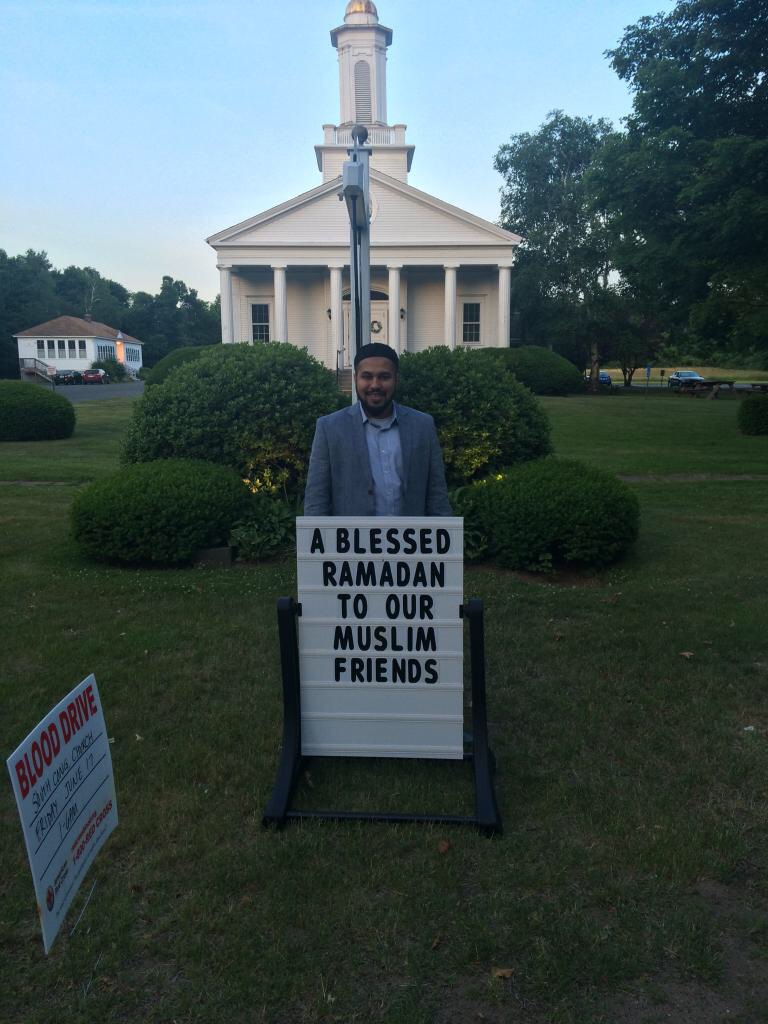
South Congregational Church.242 Salmon Brook St., Granby, CT 06035
Program:
Music – Doug
Welcome – Rev. Ginny McDaniel
Readings –
-Reading from the Quran/Reflection, Imam Sami Abdul Aziz
-The Blessings of Jesus, Anne Marie Elder
-Litanies to My Heavenly, Brown Body Elliot Altomare
-Count to 50, Jennica Betsch
Reading of the Names & laying of flowers, Elliot
Sharing in small groups, Dawn
Prayer, Ginny
Son “Singing for Our Lives”, Holly Near
Charge and Benediction, Dawn
Song “Bridge over Troubled Water”


More information about the event can be found at the hosts website here: https://storify.com/elliotaltomare/granbyvigil
June 15th, 2016 at 7pm: Brother Amer Nabil and Imam Sami Abdul Aziz attended a Interfaith Vigil for the victims of the Orlando attack on behalf of the Muslim community at Unitarian Universalist Society: East in Manchester CT under Qalem Peace Initiative.
Program:
-Gathering Music (Debbie Vinnick)
-Welcome and Chalice Lighting “Legacy” by Elizabeth Tarbox (Rev. Josh Pawelek)
-Song “Comfort Me”
-Prayer, Rabbi Richard Plavin Beth Shalom B’nai Israel, Manchester
-Music “We Hear Your Cry”
-Reflections
Imam Sami Abdul Aziz, Lighthouse for Humanity, Bloomfield Muslim Community Center
Amer Nabil – Manchester Resident of 16 years
Rev. Persida Rivera Mendez, Ministerio Nueva Creacion
-Song “One Day” by Matisyahu (Jenn Richards)
-Reflections
Saud Anwar, South Windsor City Council
Bishop John Selders, Amistad UCC and Moral Monday CT
-Candle Lighting (Debbie Vinick accompanying)
-Reading excerpt from “Poem for July 4th, 1994” by Sonia Sanchez
-Song “There is More Love”
-Benediction Rev. Cheryl A. Caronna, Faith Formation Director, Center Congregational Chuch
-Departing Music – Debbie Vinick
Amer Nabil’s statement:
My sincere thoughts and prayers are with the families in Orlando who are without their loved ones today. I pray to God, the Almighty, to give the families, the strength and patience in order to cope with the emotional pain they are suffering at this time.
My brothers and sisters in humanity, I am a proud Muslim and a proud American. I love my religion and I love this country. By profession, I am a Mental Health Nurse Practitioner, who has been working and serving in this community. My religion of Islam teaches me to be compassionate, tolerant and considerate.
The messenger of God, Prophet Muhammad peace be upon him, said “Show kindness to God’s creations on earth, so that God may be kind to you”
Especially, in this month of Ramadan, when myself and Muslims all over the world are fasting, no food, no water from dawn to dusk to gain God’s blessings, we are encouraged to double the amount of kindness, compassion, helpfulness and care in this blessed month.
The actions of this murderer who destroyed the lives of so many individuals in Orlando, did not represent Islam or Muslims. This was sick minded, violent person who was not religious in the slightest according to his family. As we now know through FBI investigations, that the motive of this hateful crime was not religious but rather personal.
Crime does not have a religion and certainly one person’s crime does not represent the whole community. Those who commit violent crimes in the name of religion, do so for their own personal motives and for their own justification.
God says in the Holy Quran, in Chapter 5, verse 32: “Whoever kills an innocent person unjustly, it is as if he has killed the whole of humankind and whoever saves a life of one innocent person is as if he has saved the lives of all of humanity.”- In Islam- to kill one innocent human being is equivalent to the sin of killing the entire humanity. No Muslim, would ever want to have that burden on him or her.
Rather, a Muslim, who wants to gain God’s blessings will do so by caring, maintaining, growing, showing compassion towards all of God’s creations.
My Brothers and sisters, Islam is a religion of peace, tolerance, compassion and kindness. And I pray, together, we can fight terrorism and hatred by spreading the message of peace.
Imam Sami Abdul Aziz statement:
Peace be Upon you
Chapter 113 – The People form the Quran
1 Say, ‘I seek refuge in the Sustainer of the people,
2 the King of the people,
3 the God of the people,
4 from the mischief of every sneaking whisperer,
5 who whispers into the hearts of people,
6 from devils and men.’
On behalf of the American Muslim community, we, want to extend our deepest condolences to the families and friends of the victims of the barbaric assault that occurred this past Sunday at Pulse, an LGBTQ nightclub in Orlando, Florida. We unequivocally say that such an act of hate-fueled violence has no place in any faith, including Islam. As people of faith, we believe that all human beings have the right to safety and security and that each and every human life is inviolable.
It is a very sad day when a person of my faith believes our religion advocates violence against peaceful individuals. Going a step further he violates the sanctity of the holy month of Ramadan in which the Quran was revealed bringing peace to hearts. Islam must be learned from Scholars & Imams of the religion. Not through the internet. As this investigation unfolded we found Omar Mateen to be a loner seeking meaning in life and finding it through websites. A person with a deep identity crisis of being from Afghan heritage, Muslim, brown skinned, and Gay. The answer to this type of darkness is the light that comes from hiring Imams, Chaplains, Scholars and by providing vouchers for religious schools which ground students in their religious and civic identity. It is a major crime and sin to harm the people of our country. They are our neighbors, friends, family members, employers, and colleagues. Harming them is corruption, a clear sign of no faith, ignorance and misguidance. God help us in our time of ignorance and save us from those who claim religion but have hearts of wolves. “The true believer is one who all people are saved, from his hand and words.” This Prophetic tradition is enough if we follow it. The Qur’an states that taking of one life is like taking the life of all of humanity. This past sunday we as human beings experienced that traumatic loss 50 times over. Everyday in this country we experience that loss through violence. Everyday the world over we experience that loss every minute through wars and other acts of barbarity. May God bring healing to our broken world. Ameen-Amen
There are extremists in America and abroad who view the world through a Manichean lens: American Manicheans want Americans to see themselves as entirely “good” and all Muslims as entirely “evil.” Muslim Manicheans want Muslims to see themselves as entirely “good” and all Americans as entirely “evil.” This is a catastrophic recipe for unrelenting violence, and it must be rejected: We will not allow the extremists to define us, mold us in their benighted image, or sow the seeds of discord among us. We are one people, so let us all in good conscience and human solidarity reject this extremist narrative and assert our shared humanity and mutual respect for the sanctity of all human life. May God bring healing to our broken world. Ameen-Amen
Pictures:


Link to Unitarian website event page: http://uuse.org/vigil-for-orlando/#.V2LOQ7srKCi
Shaykh Kemal Cecunjanin will be coming to the Hartford area to teach Ascent to Felicity, A Manual on Islamic Creed and Hanafi Jurisprudence. If you are interested please sign up here:
Flyer:
Flyer – Shaykh Kemal Class on Jurisprudence & Islamic Creed
Audio:
Class 1
Class 2 coming soon
Book Information:
Written by the eminent 11th century Hanafi scholar, Abu ’l-Ikhlas al-Shurunbulali, Ascent to Felicity is a concise yet comprehensive primer in creed and jurisprudence. It spans all five pillars of Islam, as well as the topics of slaughtering, ritual sacrifice, and hunting. To supplement the text, the translator has added key explanatory notes taken from several reliable works on theology and jurisprudence. He has also added appendices that comprise numerous supplications related to the five pillars, presented in Arabic script along with English transliteration, as well as the etiquette of visiting the Messenger of Allah (Allah bless him and give him peace) in Madina Munawwara.
Testimonials:
“An admirable rendering into lucid, fluid English of Imam Hasan al-Shurunbulali’s primer of Hanafi law, Ascent to Felicity. This concise but thorough work focuses on the five acts of worship. The book has the added feature of a fairly detailed presentation of the basics of the Muslim Creed. In translating this introductory section of Imam Shurunbulali’s treatise, Khan’s skill as a translator is on full display, as he has made sometimes involved theological concepts easily accessible to the average English reader. Khan has provided an additional service to both Shurunbulali’s work and to contemporary Muslims by augmenting the translation with insightful and extremely useful explanatory notes. The value of this work, skillfully produced by White Thread Press, goes far beyond its benefit to adherents of the Hanafi legal school. Rather, it will prove of benefit to Muslims in general as well as researchers interested in latter-day presentations of the creed and practice of Sunni Muslims.”
— Imam Zaid Shakir Co-Founder and Resident Scholar, Zaytuna College
“This book is an important contribution to the growing, but still small, corpus of traditional Islamic texts available in English translation.”
— Dr Ingrid Mattson President of the Islamic Society of North America (ISNA)
“Essential for any student of the Hanafi School. . . makes key concepts of the Hanafi school easily accessible to teachers, students, and readers.”
— Dr. Ashraf Muneeb Dean of Academy, Sunnipath.com
“An excellent primer in Islamic beliefs and worship. . . more useful as a first complete text for those seeking understanding of the fiqh of worship than the more commonly-studied Nur al-Idah.”
—Shaykh Faraz Rabbani Educational Director, Seekersguidance.com
“Aside from the flowing translation, the most impressive thing about this work for me is the comprehensive collection of nuanced notes. These serve to capture the wide range of issues one grapples with, but might never find the right answer to, in the process of his or her purification, prayer, fasting and other acts of worship. An extremely engaging and educational read.”
— Mufti Abdur-Rahman ibn Yusuf Scholar, ZamZamAcademy.com
– See more at: http://www.whitethreadpress.com/ascent-to-felicity-maraqi-l-saadat/#sthash.t5SFWCNz.dpuf
Imam Kemal Cecunjanin
Imam Kemal Cecunjanin was born in Brooklyn, New York. In 1999 he traveled to the Middle East where he lived and studied for ten years. He first traveled to Damascus, Syria where he began studying Arabic at the University of Damascus, then moved to Amman, Jordan to study under Sheikh Nuh Ha Mim Keller. While in Amman, Imam Kemal completed the Classical Arabic program at the Qasid Language Institute and he also studied Shafi jurisprudence, logic and theology with Sheikh Qusay Abu S’id; Hanafi jurisprudence with Sheikh Faraz Rabbani; and Arabic and Qur’an with Sheikh Ali Hani. He also studied in Tarim, Yemen at Dar Al-Mostafa and Ribat Tarim and attended lessons with Habib Umar Ibn Hafiz and Habib Salim Al-Shatiri. Imam Kemal was the Imam at the Islamic Unity Mosque in Astoria, New York and is the founder of mimber.org. Imam Kemal currently teaches at Jesus Son of Mary Mosque in Stratford, Connecticut and the M.E.C.C.A. Center in New York City, and is also the director of the Iqra Qur’an program at Masjid Al -Noor in Bridgeport, Connecticut.
Date: April 23rd, 2016 2:30-4:30pm
Location: Jones Library 43 Amity Street Amherst, MA 01002
Register here: https://www.eventbrite.com/publish?crumb=8a9fcf00f773e9&eid=24381071441
Sponsors:
If you are interested in sponsoring this talk as an individual, business or organization please contact Imam Aziz at 484-995-9676 or SamiAbdulAziz@gmail.com
Presentation Information:
Join us for a presentation and discussion that will examine:
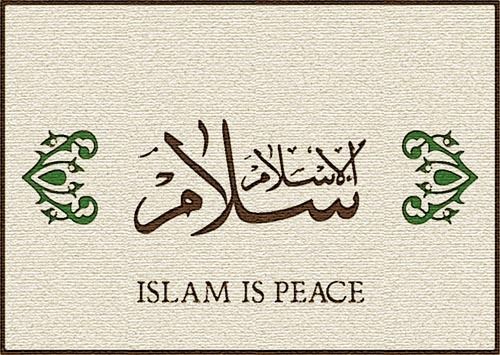
ISIS (Islamic State of Iraq & Syria) claims to represent Islam and claims its roots are in the Quran, the Muslim holy book, and the Prophetic Tradition (Hadith), recorded sayings and doings of the Prophet Muhammad. This is untrue, as there are numerous verses in the Quran and Hadith that expound justice, tolerance, peace and love for neighbors. Islam, the name of the religion, derives from the word peace in Arabic, Salaam.
Presenters:
Imam Sammy Aziz (Sami Abdul Aziz) – Sammy Aziz serves as Imam for Bloomfield Muslim Community Center and PrayerSpark.com. He is a graduate of Hartford Seminary Islamic Chaplaincy program and represents the community at the Bloomfield Interfaith Association. Imam Aziz believes strongly in establishing peace and justice between all people regardless of color, ethnicity or religion. He often refers to the following verse from the Quran for guidance: O you who have believed, be constantly upright with equity (with others), witnesses for God, even if it be against yourselves or (your) parents and nearest kin. In case (the person) is rich or poor, then God is the Best Patron for both. So do not ever follow prejudice, so as to do justice; and in case you twist or veer away, then surely God has been Ever-Cognizant of whatever you do. 4:135
Vjosa Aziz – Vjosa is a member of Bloomfield Muslim Community Center and a Public Educator. She has spoken at numerous venues on Islam including Bloomfield Library, Avon Library, Farmington Library, Asylum Hill Congregational, and First Congregational in Bloomfield.
John Parent – John is a student of Transformative Leadership and Spirituality at Hartford Seminary. John is active in promoting interfaith relations, education, understanding, peace and fellowship via various networks, joint-services, and community educational opportunities throughout the greater Hartford area.
Press Contact: The press is welcomed, please reserve your spot with Imam Aziz 484-995-9676 or SamiAbdulAziz@gmail.com
Library link: http://www.joneslibrary.org/Calendar.aspx?EID=1150&month=4&year=2016&day=17&calType=0
Asslamualaykum
In light of the situation we are facing in our community we are pleased to offer counseling services for CT and MA. Please check the new links above for more information.
May Allah accept our efforts.
Sami
Recently this question was posed to me by my friend Musa in the Nur Dersana in Philadelphia, PA. In an attempt to have a more scholarly answer I am creating this post. Answering this post in a multi-madhab society of America I will attempt to include multiple sources.
Shaykh Hamza Yusuf article Who are the Disbelieves? presents the opinions of many great scholars including Imam Ghazali, Imam Suyuti, Ibn Taymiyyah and many more. Shaykh Hamza guides the reader through the many types of kufr and opinions. Conclusion being that no not all non-Muslims go to hell-fire. Alhamdulilah Allahs mercy is quite vast.
Please access this article here: Who are the Disbelivers ~ Shaykh Hamza Yusuf
Salafi
“A person who has never heard of Islam or the Prophet SAWS (peace and blessings of Allaah be upon him), and who has never heard the message in its correct and true form, will not be punished by Allaah if he dies in a state of kufr (disbelief). If it were asked what his fate will be, the answer will be that Allaah will test him on the Day of Resurrection: if he obeys, he will enter Paradise and if he disobeys he will enter Hell. The evidence (daleel) for this is the hadeeth of al-Aswad ibn Saree’, who reported that the Prophet of Allaah SAWS (peace and blessings of Allaah be upon him) said: “There are four (who will protest) to Allaah on the Day of Resurrection: the deaf man who never heard anything, the insane man, the very old man, and the man who died during the fatrah (the interval between the time of ‘Eesaa (Jesus, upon whom be peace) and the time of Muhammad SAWS (peace and blessings of Allaah be upon him)). The deaf man will say, ‘O Lord, Islam came but I never heard anything.’ The insane man will say, ‘O Lord, Islam came but the children ran after me and threw stones at me.’ The very old man will say, ‘O Lord, Islam came but I did not understand anything.’ The man who died during the fatrah will say, ‘O Lord, no Messenger from You came to me.’ He will accept their promises of obedience, then word will be sent to them to enter the Fire. By the One in Whose hand is the soul of Muhammad, if they enter it, it will be cool and safe for them.” – Islam QA – Fatwa 1244
May Allah guide us to what is best. I heard Shaykh Khalil AbdurpRashid state that the people on this earth when they indulge in the dunya ie: drinking alcohol, over eating, dating, etc; are actually seeking God. They have a hole in their heart from the realm of the spirits which they want to fill. That whole can only be filled with the remembrance of Allah. Our job as Muslims is to help them find that lost love and thus fill them with sakina.
Glory be to Allah, we have no knowledge save that which he has given us, He is all knowing, all wise.
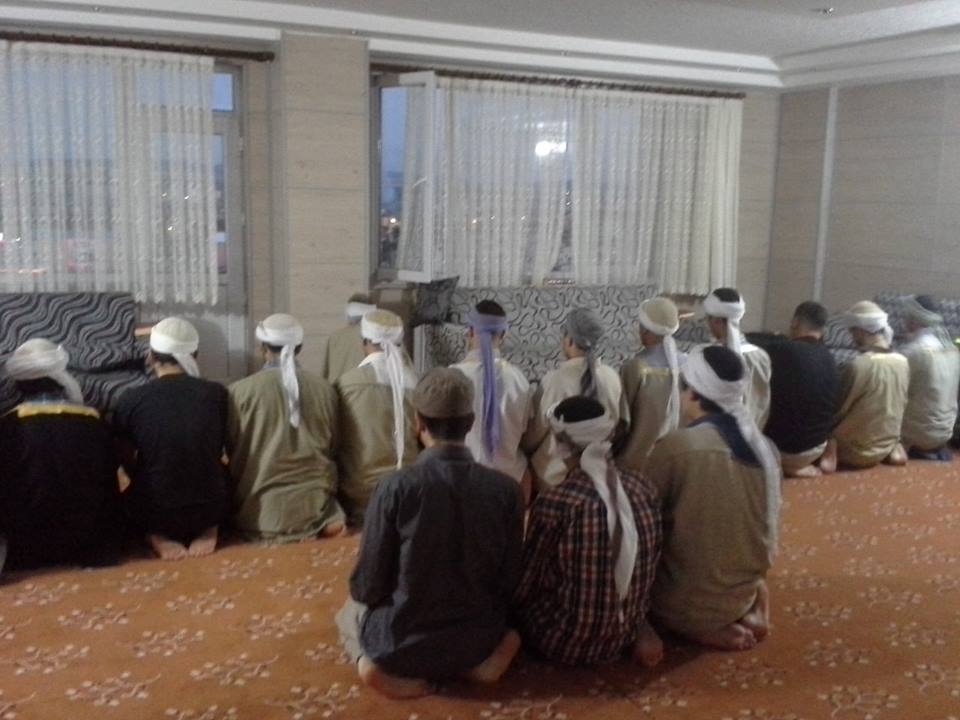
Students in Kastamonu, Turkey at a Quran retreat
“Such is the high nobility of the turban that we are told even the angels wore it. Of the Qur’anic verse, “Your Lord shall help you with five thousand angels bearing marks” (Surat Ali ‘Imran, verse 125), Ibn ‘Abbas, the greatest of the early exegetes, said: “The signs are that they wore turbans.” ” ~ The turban tradition in Islam by Sh. G. F. Haddad
“The Gospels also describe Prophet Muhammad as “wearing a crown.” Yes, this title is particular to God’s Messenger (Upon whom be blessings and peace), for “crown” means turban, for in former days, it was the Arabs who as a people, all wore the turban and headband. This definitely therefore refers to God’s Messenger (UWBP).” ~ Treatise of Light 19 Letter
Recently my class, specifically the sisters, in my class asked me about wearing Kufis. They noticed their male classmates not wearing kufis while they are obligated to wear hijab. This is a great point and a point of contention among Muslim men and women in the west. Why should a Sister have to face society alone? Why don’t the Brothers also represent? Why do the Brothers always use the excuse of Sunnah when we should be following all Sunnah and our purpose in the west is to be actively doing dawah?
All great questions! I for one have for many years been lax in my implementation of kufi wearing and until recently never wore a turban. Alhamdulilah my time with the Nur Jemaat has changed all of that!
Whenever I see a Jewish man wearing a yamaka, a Christian wearing a cross or a Sikh wearing a turban, I am reminded of the religious freedom in this country. We are allowed to practice our faith, we are allowed to have a beard and wear a kufi, and we should! It is the best types of dawah because often the conversation becomes personal and emotional. Causing one to imprint upon a person heart both the knowledge and emotional value of the beard or kufi or hijab within the Islamic tradition.
The following are Hadith, Quran and scholar opinons that support the wearing of Turbans:
Just a reminder that following the Prophet pbuh in actions, speech and way of life is an obligation laid out in the Quran in the following verses:
The Holy Quran, Sura #3;Ayah #31
“Say (O Muhammad SAW to mankind): “If you (really) love Allâh then follow me (i.e. accept Islâmic Monotheism, follow the Qur’ân and the Sunnah), Allâh will love you and forgive you of your sins. And Allâh is Oft Forgiving, Most Merciful.”
The Holy Quran, Sura #33;Ayah #21
“Indeed in the Messenger of Allâh (Muhammad SAW) you have a good example to follow for him who hopes in (the Meeting with) Allâh and the Last Day and remembers Allâh much.”
The Holy Quran, Sura #42;Ayah #52
“And thus We have sent to you (O Muhammad SAW) Ruhan (an Inspiration, and a Mercy) of Our Command. You knew not what is the Book, nor what is Faith? But We have made it (this Qur’ân) a light wherewith We guide whosoever of Our slaves We will. And verily, you (O Muhammad SAW) are indeed guiding (mankind) to the Straight Path (i.e. Allâh’s religion of Islâmic Monotheism).”
The Holy Quran, Sura #59;Ayah #7
“And whatever the Prophet gives you, ACCEPT IT and whatever he forbids you, ABSTAIN (from it)”
Hadith – There are numerous narrations of the Prophet pbuh, Sahaba and Saliheen (righteous people) wearing Turbans. I will pick out the hadith that I find most awesome in meaning, and most motivating to my spirit:
-Abu Dawood and Tirmidhi
Roknah (Radhiallaahu Án) reports that Rasulullah (Sallallaahu Álayhi Wasallam) said “The distinction between us and the polytheists is the turbans over our caps. “Note : Also quoted by Al-Tabrizi in his Mishkat Al-Masabih and this clears up the false notion that this was just the way of the arabs and not a particular practice of Rasulullah (SAW) and this shows us that we should wear caps under our Imaamas to differentiate from the sieks and other Kufar who wear turbans but without caps under them.
-MISHKAT page #377 and also reported by Baihaqi in Shuabul Imaan.
Ubadah (Radhiallaahu Án) reports that Rasulullah (Sallallaahu Álayhi Wasallam) “Make a practice of tying Turbans since it is a hallmark of the angels.” Note: Here Rasulullah(SAW) is even advising others to wear the Imaama!
-Tabrani
Musa Ashari (Radhiallaahu Án) narrates that Jibraeel would come to Rasulullah (Sallallaahu Álayhi Wasallam) wearing a turban.
-At-Tabrani and Haakim reports this to be reliable Hassan
(Also quoted in Tabarani’s al-Mu`jam al-kabir (1:162), Bazzar’s Zawa’id, al-Hakim’s Mustadrak (4:193), al-Khatib al- Baghdadi’s Tarikh Baghdad (11:394), and Ibn `Asakir’s Tahdhib tarikh dimashq al-kabir (5:178). Also in the book Turban Thowb and kufi by Maulana FazlurRahman on pg#24)
Ibn Abbas (Radhiallaahu Án) reports that Rasulullah(SAW) said “Adopt the Turban as it will increase your Hilm ( good character, intelligence, patience).”
Scholarly Opinions:
-Maulana Fazlul Karim
(This is from his commentary of Mishkat vol#1 pg#630)
“The holy Prophet (Sallallaahu Álayhi Wasallam) used to wear a Turban and he said that the angels also wear it in the heavens and the turban protects the head and adorns the face.”
-Ibn Hajar Al-Asqalani (Rahimahullah) mentioned in FathulBaari pg#491 and 493
That Imaam Bukhari and Imaam Muslim both wore Turbans.
Note: that they were not arabs but took this practice as the Sunna of Rasulullah (Sallallaahu Álayhi Wasallam) .
-Malik Fiqh
(Quoted by Ibn Abi Zayd, al-Jami` fi al-sunan (1982 ed.) p. 228)
Imaam Malik said “The turban was worn from the beginning of Islam and it did not cease being worn until our time. I did not see anyone among the People of Excellence except they wore the turban, such as Yahya ibn Sa`id, Rabi`a, and Ibn Hurmuz. I would see in Rabi`a’s circle more than thirty men wearing turbans and I was one of them, and Rabi`a did not put it down until the Pleiades rose (i.e. until he slept) and he used to say: “I swear that I find it increases intelligence.”
Today’s Scholars opinions:
–Wearing a Turban by Shyakh Abdus Sattar on YouTube
-Q) Is the prayer valid if Imam of the mosque does not cover his head with cap or same cloth? What kind of requirement is it to cover one’s head in prayers. Is it wajib, Mustahab, or what? (Zubair A. Khan, Chicago)
A) Covering one’s head during salah is a sunnah and one should act upon it to the best possible extent, however, it is not a mandatory condition for the validity of salah therefore, the obligation is discharged without it, though devoid of the blessings of sunnah. We should try our best to make our salah as close to the sunnah as possible. Even a slight carelessness may deprive us from the barakah and reward which every sunnah of the Holy Prophet, Sall-Allahu alayhi wa sallam, may bring to his true follower. Therefore, we should not take this matter lightly.
Mufti Taqi Usmani
-Question: What is the ruling on a topi in shariah? sunat, mustahab ect? If it is possible can you please provide daleel?
Answer: In the Name of Allah, Most Compassionate, Most Merciful,
Wearing a hat (Qalansuwa in Arabic) is the Sunnah of our blessed Messenger of Allah (Allah bless him & give him peace), Sahaba (Allah be pleased with them all) and the great scholars and pious predecessors of this Ummah.
There are many evidences which support this. Just to mention a few:
1) Abdullah Ibn Umar (Allah be pleased with him) narrates that the Messenger of Allah (Allah bless him & give him peace) used to wear a white hat (Recorded by Tabrani).
2) Hasan al-Basri (Allah be pleased with him) says: “The people (Sahaba-Allah be pleased with them all) used to perform Sajdah (prostration) upon their turbans and hats” (Sahih al-Bukhari, 1/151).
3) Rukanah (Allah be pleased with him) says, I heard the Messenger of Allah (Sallallahu Alayhi Wasallam) say:“The difference between us and the polytheists is, wearing the turban over the hat” (Sunan Abu Dawud, 4075 & Sunan Tirmizi, 3919).
4) In the ‘Musannaf’ of Ibn Abi Shaybah, the wearing of a hat is reported from Ali ibn al-Husain, Abdullah ibn Zubair, Dahhak and Abu Musa (Allah be pleased with them all).
It is clear from the above that wearing a hat is a Sunnah. It has been the practise of the Ummah throughout history, and has become one of the symbols of Islam.
The great Hanafi jurist, Mullah Ali al-Qari (Allah have mercy on him) states that the wearing of the hat has become one of the salient symbols of Islam. (Mirqat al-Masabih, vol.8 pg.246).
Due to the above, the scholars mention that even though, not wearing a hat can not be classed as unlawful (haram), as it is a Sunnah, but due to the fact that it has become one of the signs of Islam, it is generally undesirable to keep the head exposed. One should try to keep the head covered whenever reasonably possible.
And Allah knows best
Muhammad ibn Adam
Darul Iftaa
Leicester, UK
Turban vs Kufi:
There are definitely more hadith and scholarly approvals for Turban than for Kufi. There are even opinions which discourage Kufi such as this one:
-Tirmidhi
Roknah (Radhiallaahu Ánhu) reports that Rasulullah (Sallallaahu Álayhi Wasallam) said “The distinction between us and the poluthesists is the turbans over our caps.”
However there are a few hadith that speak about Kufi:
-Tabrani And Imaam Suyuti
Ibn Umar (Radhiallaahu Ánhu) narrates that Rasulullah (Sallallaahu Álayhi Wasallam) used to wear a white cap (kufi).Tabrani has reported this hadith to be Hasan (reliable) and Suyuti has classified this hadith as highly authentic(Sahih) in the book Sirajul Muneer vol #4 pg#112)
-Sahih Al-Bukhari Volume 2 pg #863
It is mentioned that Anas Bin Malik (Radhiallaahu Ánhu) used to wear a kufie (cap).
So whats the difference? It seems the emphases is on keeping the head covered while the Turban being prefereed over the kufi in covering the head:
-Fatwaa Thunaaiyya Vol #4 pg #291
“Rasulullah (Sallallaahu Álayhi Wasallam) always used to keep his head covered during salah.”
-Fatwaa Thunaaiyya Vol #1 pg #523
“to intentionally remove the headgear (kufi or Imaama) and performing Salah bare-headed is contrary to the sunna.”
-Maulana Fazlul Karim
(This is from his commentry of Mishkatvol#1 pg # 630 )
“There are a few hadith about the use of the cap (kufi) by Rasulullah (Sallallaahu Álayhi Wasallam). It should be generally round and even on top.”
Kufi Styles: I personally enjoy the Shukr Kufi styles: Shukr Kufis
Please feel free to send me more sources or information regarding this topic. I would love to learn more.
Glory be to Allah, we have no knowledge save that which you have gives us, you are all knowing, all wise.
Sources:
http://ibnfarooq.tripod.com/Sunnaclothes.htm#kufi
http://www.ilmgate.org/the-status-of-the-turban-in-light-of-the-sunnah/
http://seekersguidance.org/ans-blog/2014/02/21/is-it-a-sunna-to-wear-a-turban/
The turban tradition in Islam by Sh. G. F. Haddad http://www.livingislam.org/k/tti_e.html


 Qalem
Qalem 